
Virtue and a Sledgehammer Preview – A Sledgehammer, A Broken Family, and Some Difficult Choices
Reviewed by

There are plenty of games that let you destroy things just because it feels good.
Virtue and a Sledgehammer is different.
At first, it looks like a game about taking a giant sledgehammer and smashing your way through anything that gets in your path. And yes, you will be doing a lot of that. Buildings can be destroyed, robots can be smashed apart, and the path forward is often whatever you decide to break through.
But after spending a couple of hours with the preview build, it became clear that the sledgehammer is only part of the story.
Underneath all that destruction is a surprisingly emotional story about family, childhood, grief, and what actually makes someone human.
A Story About Two Sisters
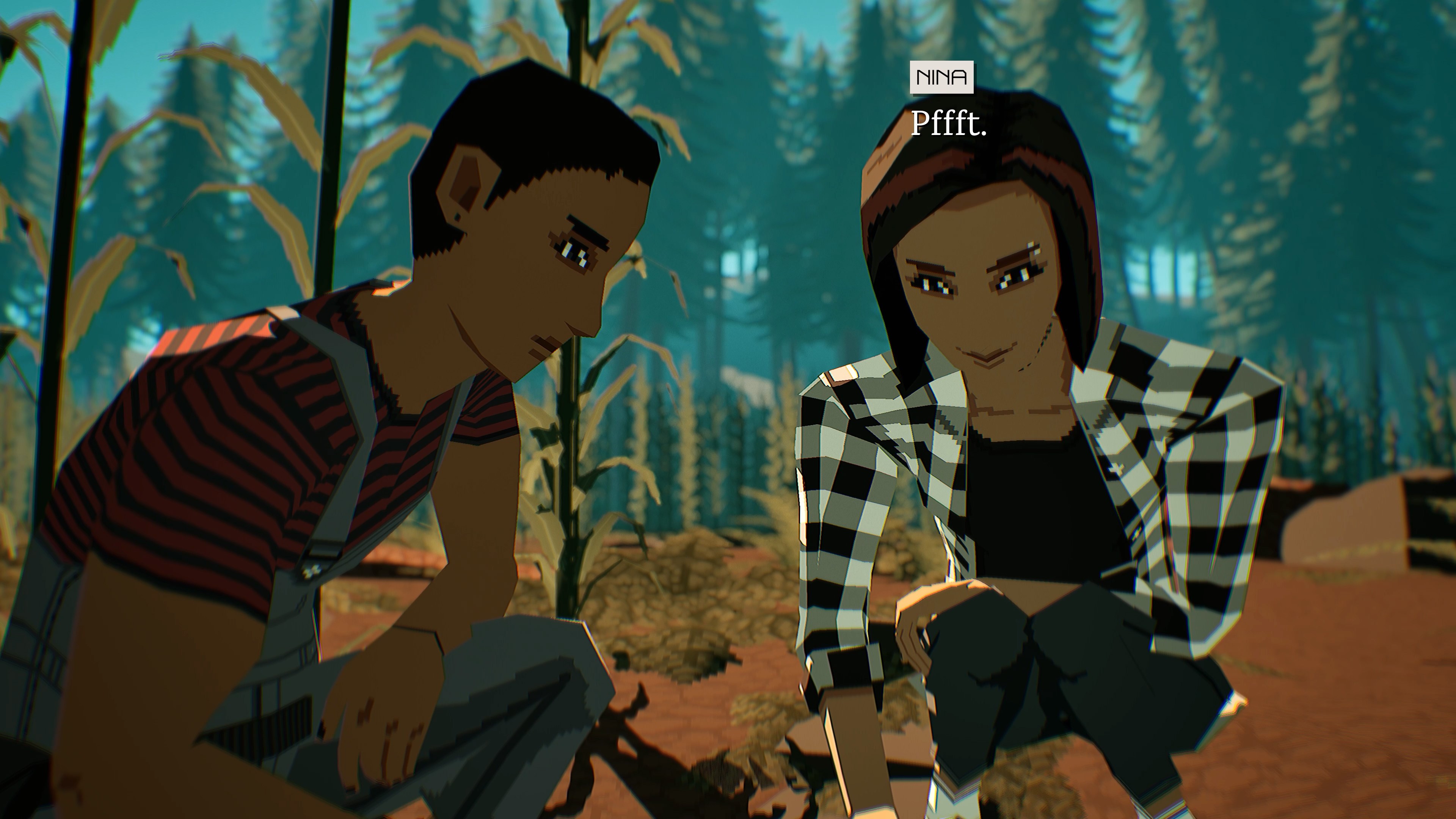
You play as Pratelle, who returns to her hometown after a difficult childhood and a complicated relationship with her family.
At the center of the story are Pratelle, her sister Nina, and their mother.
Their childhood wasn’t an easy one, and the game slowly begins to reveal the relationship between the two sisters and their mother through memories scattered throughout the world.
The situation becomes even more complicated when their mother is dying.
Nina finds a way to keep her alive by transferring her into a robotic body, but Pratelle doesn’t agree with what her sister is doing. Nina has already gone much further, transforming other people into robots as well.
And this is where Virtue and a Sledgehammer starts asking some genuinely uncomfortable questions.
Are these robots still the people they once were?
Do they still have feelings?
If they remember their lives, their families, their regrets and the things they wanted to do before they died, are they really just machines?
Or does becoming something different mean that the person they once were is already gone?
The game doesn’t seem interested in giving you an easy answer.

Smashing Your Way Through the Past
The main gameplay mechanic is exactly what the title promises.
You have a sledgehammer, and you’re going to use it.
A lot.
Buildings, walls and other parts of the environment can be destroyed to open new paths. The destruction is surprisingly satisfying. But the destruction isn’t just there to make the game feel good.
As you destroy your surroundings, you uncover memories from Pratelle’s past. Some are warmer and more personal, while others reveal the difficult relationship she had with her family.
It makes the destruction feel much more connected to the story.
You’re not simply smashing your way through a random town. You’re literally tearing apart pieces of the place where Pratelle grew up.
And the more you uncover, the more you start to understand why she feels the way she does.
Are They Really Just Robots?
This is probably the part of the game that stayed with me the most.
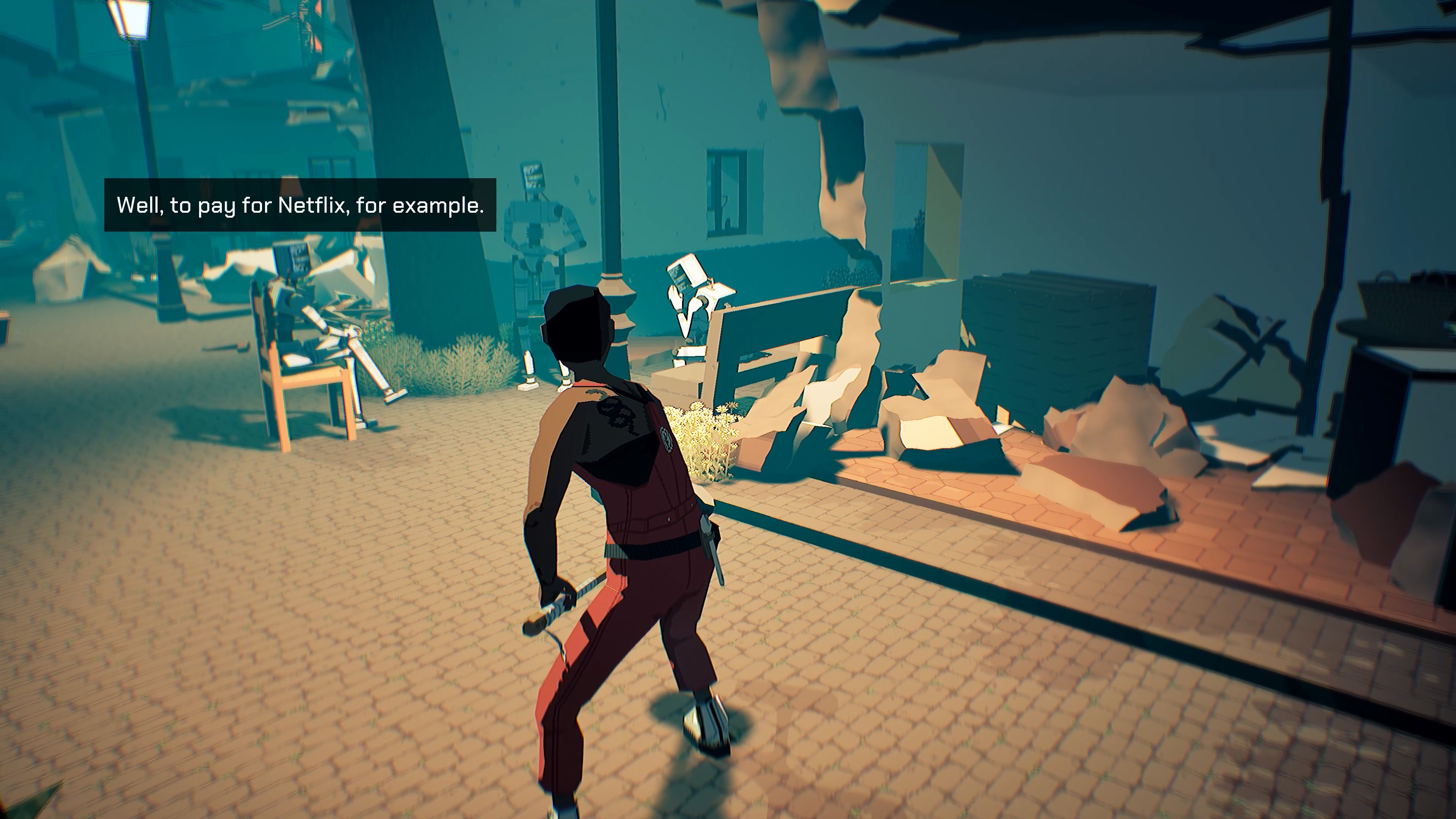
As you explore, you’ll encounter the robotic versions of people who once lived in the town.
At first, it’s easy to see them as enemies.
They’re robots. They’re standing in your way. You have a giant hammer.
Simple enough.
Then some of them start talking.
Some remember their lives. Some talk about their families. Some have strange requests. Others will actually beg you not to destroy them.
Suddenly, that simple act of swinging the hammer doesn’t feel quite as simple anymore.
I found myself stopping more than once because I wasn’t sure whether I actually wanted to destroy the robot standing in front of me.
The game plays with that feeling really well.
You can tell yourself that they’re machines and that they don’t really feel anything. You can convince yourself that destroying them is no different from destroying a wall.
But then they say something that makes you question that decision.
Some encounters forced me to stop and wonder whether the beings in front of me are people or simply machines programmed to behave like them. And that’s where the game becomes much more interesting than its basic premise suggests.
The Memories Make the Destruction Mean Something
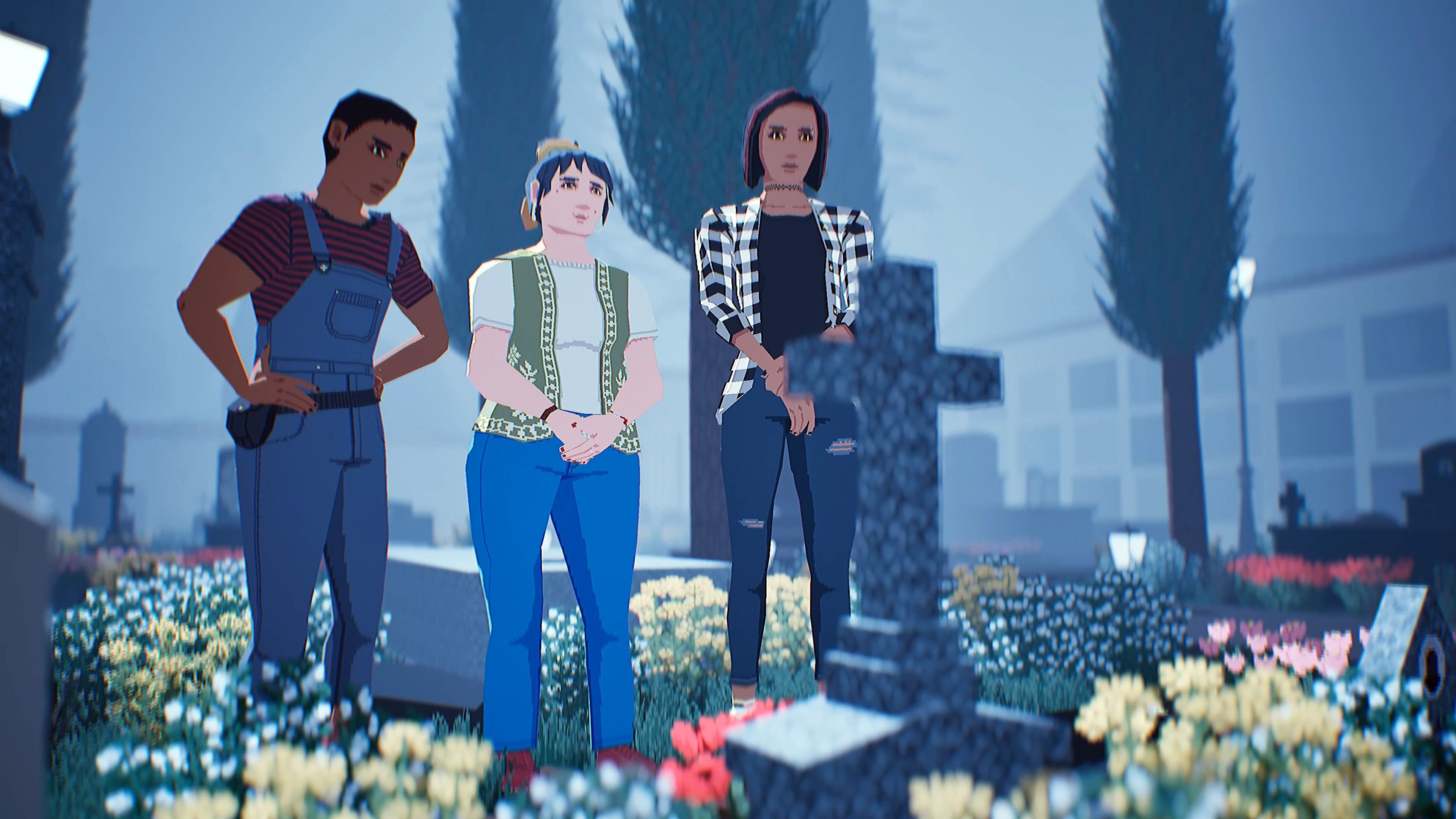
One of the things I liked most during my time with the preview is how the memories change the way you look at what you’re doing.
You’re not just collecting pieces of lore.
You’re learning about Pratelle’s childhood, her mother, her sister and the experiences that shaped her.
The story gradually gives more context to the anger behind everything she’s doing, without simply telling you how you’re supposed to feel about it.
The game is heavily focused on grief, family and confronting the past, with the destructive gameplay acting as a physical representation of that process.
That combination works surprisingly well.
The game can go from smashing through a building to showing you something deeply personal from Pratelle’s past, and suddenly that building doesn’t feel like just another object in your way.
It Makes You Question Your Own Choices
What I’m most curious about now is where the story is going to take this idea.
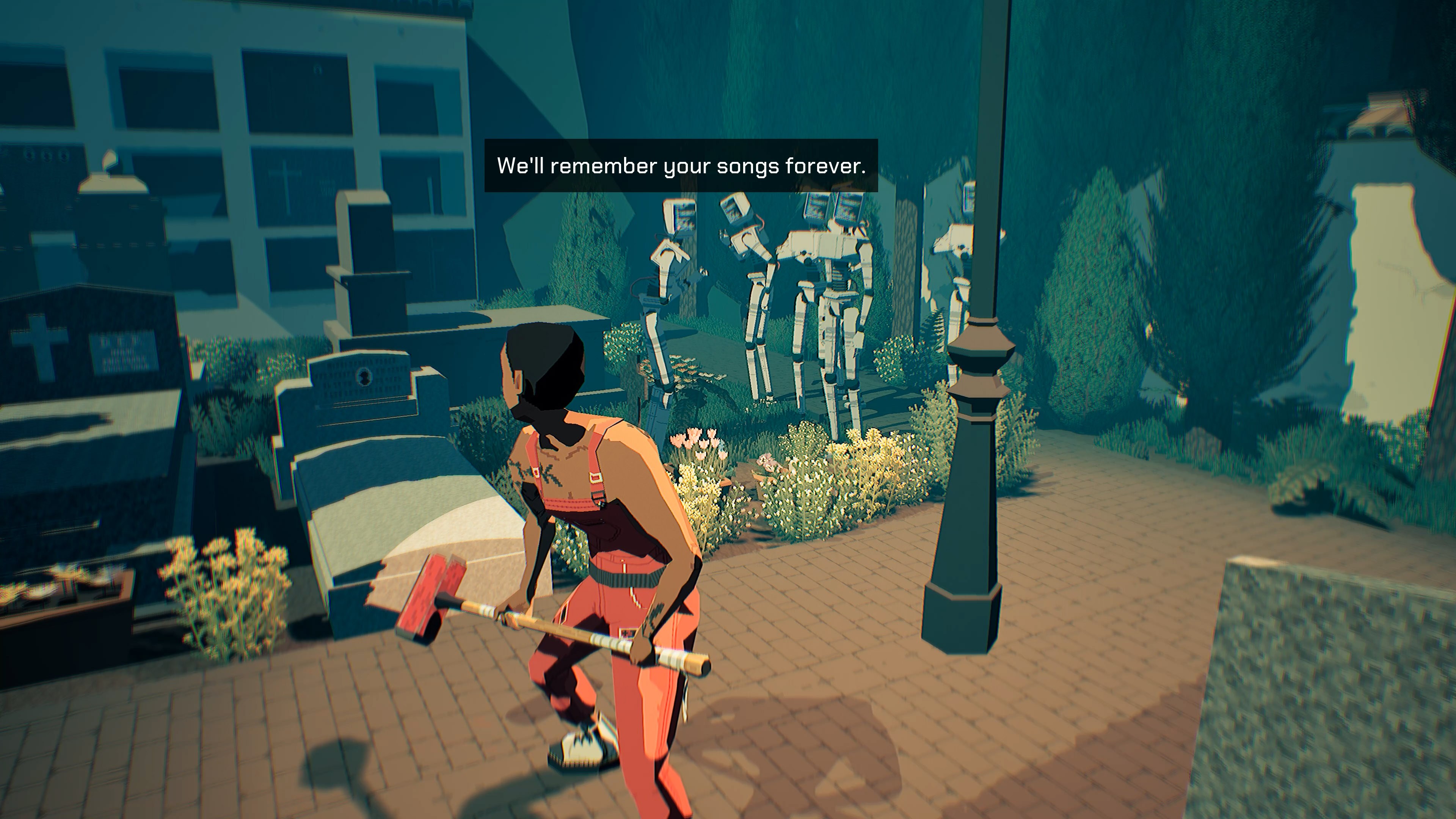
The game constantly puts you in situations where it’s tempting to simply believe that these robots aren’t human.
They’re machines.
They can’t possibly have real emotions.
Right?
But then you meet one that remembers something incredibly personal, or asks you for something unexpected, or simply begs you to stop.
And you’re left with a question that the game doesn’t seem interested in answering for you.
What exactly makes someone human?
Is it the body?
The memories?
The emotions?
The ability to suffer?
Or is it simply believing that you’re still the same person you were before?
These questions aren’t completely new in games, but Virtue and a Sledgehammer presents them through something much more physical. Instead of sitting through a conversation about the nature of humanity, you’re standing there with a giant hammer deciding what happens next.

A Promising Start
After a couple of hours with the preview build, I’m definitely curious to see where Virtue and a Sledgehammer goes from here.
The destruction is fun, but it’s the story and the uncomfortable decisions that have me wanting to play more.
I want to know more about Pratelle and Nina.
I want to understand what really happened between them and their mother.
And most importantly, I want to see how the game eventually answers or refuses to answer, the question of whether these robots are still the people they used to be.
Virtue and a Sledgehammer has already managed to make me hesitate before swinging a hammer at a robot, and that’s probably a pretty good sign for a game whose entire premise is built around destroying everything in your way.
This is only a preview based on the first few hours, so there’s still a lot of the story I haven’t experienced yet. But if the rest of the game continues building on these ideas, Virtue and a Sledgehammer could end up being a surprisingly emotional journey hidden underneath all that destruction.
Virtue and a Sledgehammer
Developer: Deconstructeam & Selkie Harbour
Publisher: Devolver Digital
Release Date: October 27, 2026
Platform: PC